
Bruges and Ghent are only about 25 minutes apart by train, and both have canals, medieval squares and towers on every skyline. Most visitors only have time for one, though, and they’re more different than they look. Bruges is a small, perfectly preserved fairytale town, and it’s very crowded. Ghent is a lively university city with just as much history and far fewer tour groups. As overtourism pushes travellers towards quieter alternatives, Ghent is increasingly recommended as the better day out (HomeExchange).
Here’s how they compare, and how to see both if you can’t choose.
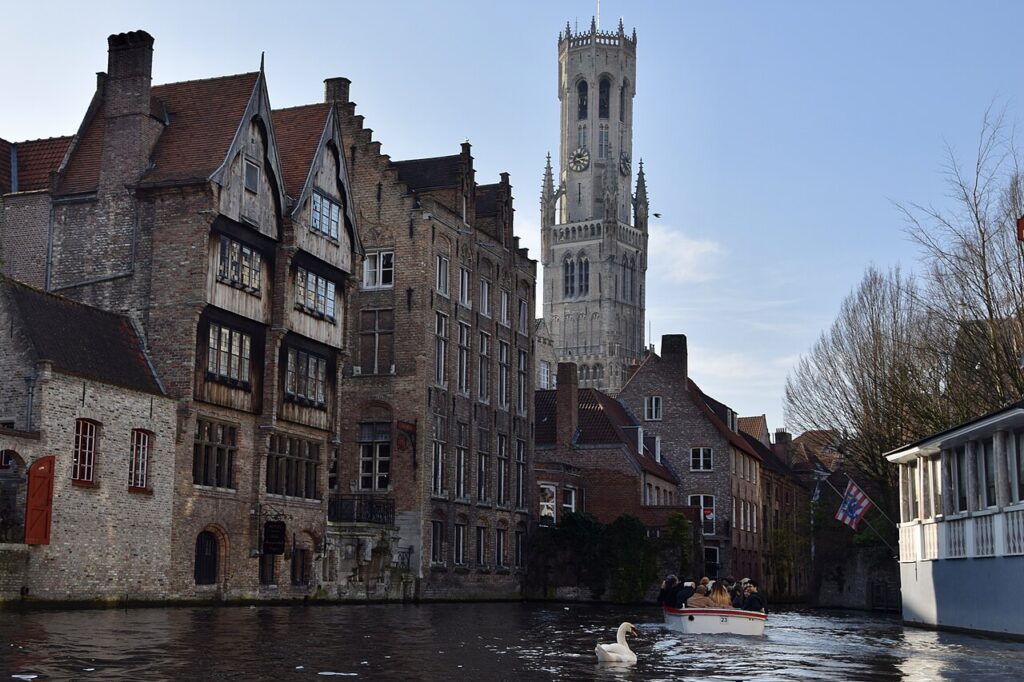

Bruges vs Ghent at a glance
| Bruges | Ghent | |
|---|---|---|
| Feel | Small, quiet streets, a postcard on every corner | A larger, lived-in student city with a buzz |
| Crowds | Very busy with day-trippers, even off-season | Noticeably quieter, and feels local |
| Train from Brussels | About 1 hour | About 35 minutes |
| Walk from station to centre | About 20 minutes (or a short bus) | 20 to 30 minutes (or a tram) |
| Signature sights | Belfry, Markt, Burg Square, Basilica of the Holy Blood, Groeninge Museum | Gravensteen castle, St Bavo’s Cathedral and the Ghent Altarpiece, Graslei and Korenlei quays |
| Evenings | Very quiet once day-trippers leave | Bars, restaurants and nightlife |
| Best for | First-timers, romantic trips, photographers | Food lovers, art and history fans, anyone who dislikes crowds |
Train times are as reported by travellers on the Rick Steves travel forum. Station and sight details are from The World Was Here First.
Choose Bruges if…
- You want the fairytale. Bruges’ historic centre is a UNESCO World Heritage Site, and almost every street looks like a painting.
- You like climbing towers. The Belfry is 83 m tall, with 366 steps to the top and a wide view over the rooftops.
- You love Flemish art. The Groeninge Museum has masterpieces by the Flemish Primitives, and Michelangelo’s Madonna of Bruges is in the Church of Our Lady.
- You can stay overnight. Several travellers say Bruges is at its best in the evening, after the day-tripper crowds leave (forum).
Choose Ghent if…
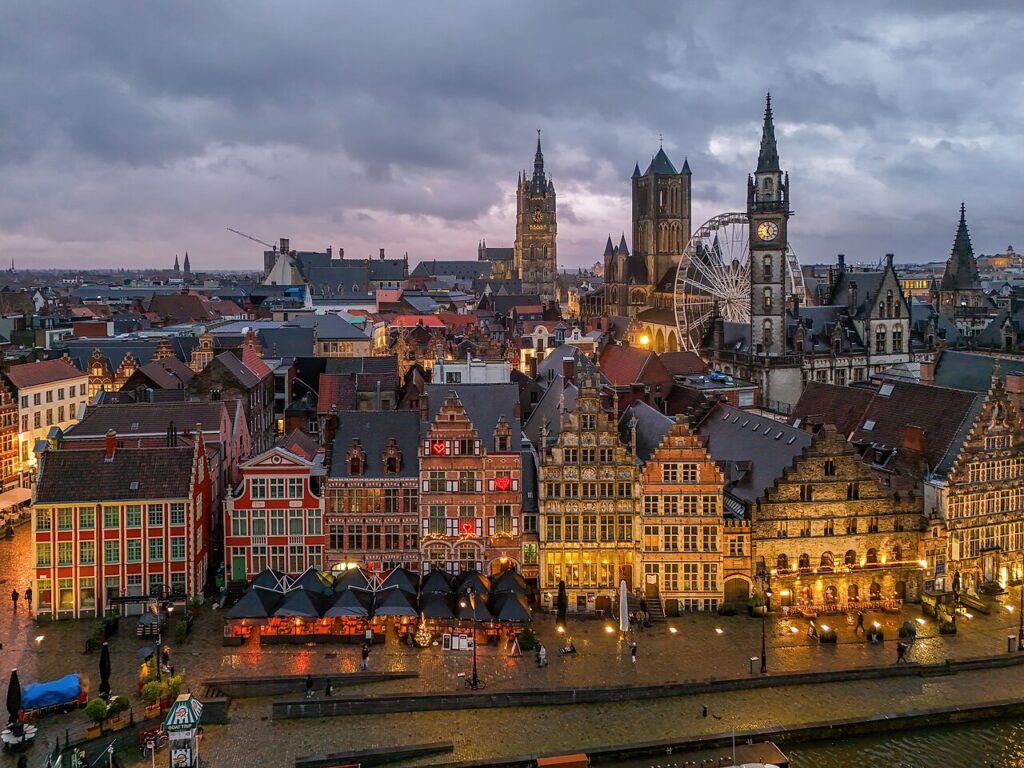

- You want history without the crowds. Ghent has as many medieval landmarks as Bruges, but it’s a working city, so you won’t feel you’re in a theme park.
- You want to see a castle. Gravensteen, the Castle of the Counts, dates from around 1180 and stands in the middle of the city.
- You want one of Europe’s greatest paintings. The Van Eyck brothers’ Ghent Altarpiece (Adoration of the Mystic Lamb) is in St Bavo’s Cathedral.
- You care about food and evenings. The Patershol district has small restaurants in medieval lanes, and the student population keeps the city lively at night.
How to see both in one day
It’s possible, and many travellers do it from Brussels. Here’s a plan that works:
| Time | Plan |
|---|---|
| 8:30 | Train from Brussels to Bruges, about 1 hour |
| 9:30 to 14:00 | Bruges: the Markt, the Belfry (go early to avoid the queue), Burg Square and a canal boat |
| 14:15 | Train from Bruges to Ghent, about 25 minutes |
| 15:00 to 20:00 | Ghent: Gravensteen, St Bavo’s, then sunset and dinner on the Graslei |
| 20:30 | Train back to Brussels, about 35 minutes |
If you have two days, it’s much better to stay a night in Bruges. Early morning and evening are the magic hours there.
Tips for either city
- Go early. In Bruges especially, the main squares fill up from late morning as tour coaches and cruise passengers arrive.
- Visit on a weekday, and avoid summer weekends if you can.
- Check museum closing days. Several Bruges museums, including the Groeninge, close on Mondays.
- Take the canal boat in either city. It’s the easiest way to see the old quays from the water.
What it costs
| Bruges | Ghent | |
|---|---|---|
| Mid-range hotel | About €150 to €230 a night, depending on season | Slightly cheaper on average |
| Meal in a casual restaurant | About €15 to €25 | Similar |
| Belgian beer | About €4 to €6 | Similar |
| Top paid sight | Belfry climb, about €15 (free with the city museum pass) | Gravensteen castle, with audio tour |
Prices are from The World Was Here First and vary through the year. Bruges hotels get booked up and expensive on summer weekends and at Christmas, so book early if you plan to stay overnight.
Getting around
- Bruges is compact enough to walk everywhere. From the station it’s about 20 minutes on foot, or a 5-minute bus ride into the centre.
- Ghent is bigger. Sint-Pieters station is a 20 to 30 minute walk from the centre, so most visitors take the tram. Bikes are everywhere, and renting one is a great way to explore.
- Between the two cities, trains run frequently all day, so you don’t need to book a fixed time.
Which is better at Christmas?
Both hold Christmas markets. Bruges’ market on the Markt, with an ice rink in some years, is the more photogenic. Ghent’s market is spread across several squares in the centre and is usually less crowded.
FAQ
Is Ghent better than Bruges?
Neither is better. They suit different travellers. Bruges is prettier and more compact. Ghent is livelier, less crowded and has more to do in the evening. If you hate crowds, choose Ghent.
Is Bruges too touristy?
In the middle of the day, it can feel that way. Stay overnight, or arrive early and stay late, and you’ll see a much calmer side of the city.
How many days do you need in Bruges and Ghent?
One full day for each is ideal. You can see the highlights of both in a single long day from Brussels.
Sources
- The World Was Here First: Bruges or Ghent?
- Rick Steves forum: day trip from Brussels, Bruges or Ghent
- HomeExchange: destinations to avoid in 2026 and alternatives